The Super Bowl halftime show has always been more than a musical performance. It is a global cultural moment watched by millions, where entertainment, identity, and public reaction often intersect. In Super Bowl LX, that intersection became impossible to ignore. On one side was Bad Bunny, delivering a visually rich, Spanish-language performance filled with Latino symbolism and global pop stars. On the other side was a rival livestreamed event organised by Turning Point USA, positioning itself as an “All-American” alternative.
This article looks at both halftime shows with equal weight and a neutral lens. Rather than judging which performance was better, it examines what this moment says about changing expectations around the Super Bowl and why rival halftime shows are becoming a trend worth paying attention to.
The Main Stage: Bad Bunny’s Super Bowl Halftime Show
Bad Bunny entered the Super Bowl halftime stage with unusually high expectations. As one of the most streamed artists in the world, his presence already signalled a shift in how the NFL sees its audience. His performance leaned heavily into Puerto Rican culture, using visual elements such as neighbourhood streets, a sugarcane field, and a central “casita” that mirrored his recent live residency themes.
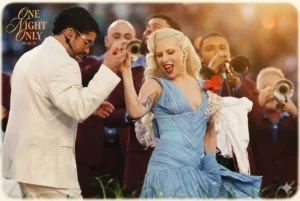
The performance featured surprise appearances by Lady Gaga and Ricky Martin, creating a bridge between global pop and Latin music traditions. A staged wedding ceremony and choreographed street scenes added layers of symbolism, while the music moved between reggaeton, salsa, and pop.
What made the performance controversial was not a single statement, but the overall tone. It was largely in Spanish, proudly centred on Latino identity, and framed unity through culture and celebration. Reactions to this were sharply divided. Many viewers praised it as historic and inclusive. Others questioned whether it fit their idea of what a Super Bowl halftime show should represent.
The Alternative Stage: Turning Point USA’s Rival Halftime Show
At the same time, Turning Point USA streamed its own “All-American Halftime Show” online. The event featured artists such as Kid Rock, along with country musicians Brantley Gilbert, Lee Brice, and Gabby Barrett. The show was promoted as family-friendly and patriotic, offering viewers an alternative if they felt disconnected from the NFL’s official halftime performance.
Unlike the main halftime show, this event was not about spectacle or global appeal. It focused on familiar musical styles, national symbols, and a clear emotional message tied to faith, tradition, and American identity. A tribute segment honoured the late founder of Turning Point USA, reinforcing the event’s ideological roots.
The rival show attracted millions of viewers across streaming platforms. While it did not match the scale of the NFL broadcast, its reach demonstrated that there is a real audience for alternative halftime programming.
Why Rival Halftime Shows Are Emerging
The rise of a rival halftime show during Super Bowl LX reflects a broader trend in media consumption. Audiences today are no longer passive. When a major cultural event does not reflect their preferences, they increasingly seek or create alternatives.
Several factors explain this shift:
It shows that entertainment is now closely tied to identity. Music, language, and symbolism matter more than ever in how audiences interpret performances.
It highlights the power of streaming platforms. Organisations no longer need television networks to reach large audiences during major events.
It reflects a fragmented audience. The idea of a single halftime show pleasing everyone is becoming less realistic.
Rather than being a one-off reaction to Bad Bunny, the Turning Point USA event fits into a growing pattern of cultural counterprogramming.
Performance as Message, Not Protest
One important aspect of this Super Bowl controversy is that neither halftime show relied on direct political speeches. The messaging came through performance choices, aesthetics, and reactions afterward.
Bad Bunny’s show communicated inclusion and cultural pride through music, staging, and language. Turning Point USA’s show communicated patriotism and tradition through artist selection and framing. In both cases, the performances allowed audiences to project their own meanings onto what they saw.
This indirect approach made the controversy broader and longer-lasting. Viewers debated symbolism, intent, and representation rather than reacting to a single explicit statement.
A Turning Point for the Super Bowl Halftime Show
Super Bowl LX may be remembered less for football and more for what it revealed about American culture. The coexistence of two halftime shows, each claiming to represent its audience, signals a shift away from a single cultural centre.
For the NFL, this moment raises questions about future halftime selections. Global stars like Bad Bunny expand international reach, while alternative events show that some viewers feel left out of that expansion. For audiences, it confirms that the halftime show is no longer just entertainment. It is a mirror of social change, media fragmentation, and evolving ideas of identity.
Conclusion
The Bad Bunny Super Bowl halftime show and the Turning Point USA rival event were not simply competing concerts. Together, they illustrated how the Super Bowl has become a stage for multiple interpretations of culture and belonging.
As rival halftime shows gain traction, future Super Bowls may see even more alternative programming. Whether this trend continues or fades, Super Bowl LX has already marked a clear shift. The halftime show is no longer one voice speaking to everyone. It is many voices, speaking to different audiences, at the same time.